
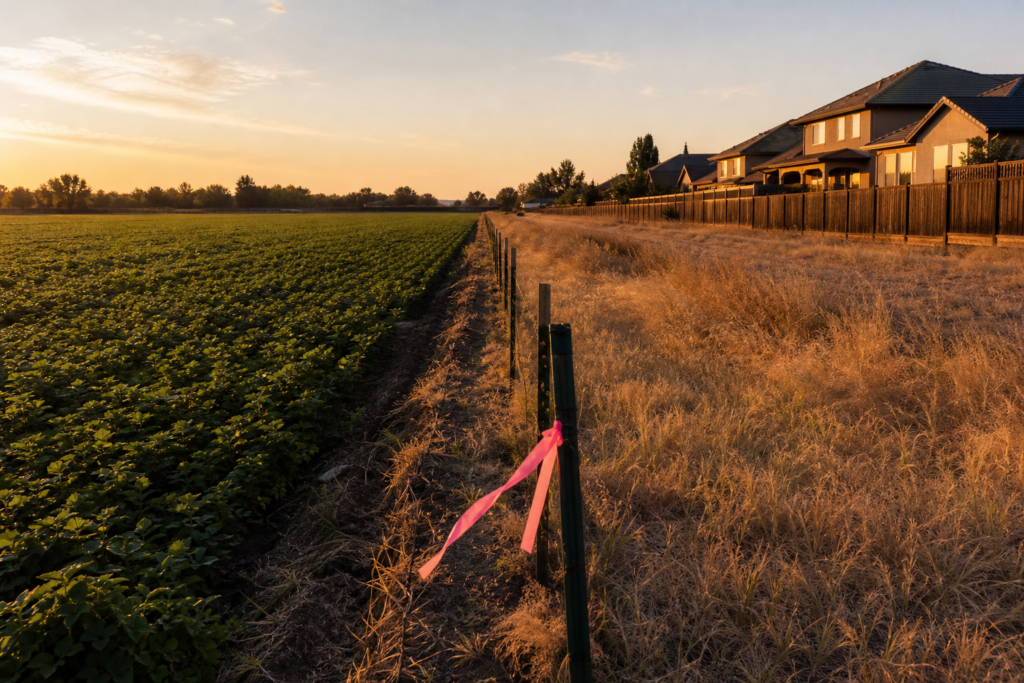
The real estate market in Yolo County is flat on price and still quick on pace. C.A.R. reported a $637,500 median in July 2026, and Zillow shows a median 17 days to pending in August. UC Davis employment supports Davis demand, while farmland policy and water access drive rural values.
How’s the Real Estate Market in Yolo County?
How’s the real estate market in Yolo County?
The real estate market in Yolo County is flat on price and still quick on pace. The California Association of REALTORS® (C.A.R.) reported a county median of $637,500 for July 2026, slightly above July 2025, and Zillow’s August 2026 snapshot shows homes going pending in a median of 17 days with 402 homes for sale. UC Davis employment supports demand in Davis, while farmland preservation policy and water access drive values on rural parcels.
Key Takeaways
- The Yolo County median sale price was $637,500 in July 2026, up from $635,000 in July 2025 and down from $642,500 in June 2026.
- Zillow’s August 2026 snapshot shows 17 median days to pending, 402 homes for sale, and an average home value of $617,754, down 0.7% year over year.
- UC Davis generates about $9.57 billion in annual economic impact in the Sacramento region and supports roughly 61,700 regional jobs, which is why it anchors housing demand in and around Davis.
- About 56% of Yolo County’s acreage is agricultural, and county policy favors compact urban growth, so rural land should never be priced like a residential lot with extra room.
- Water rights are not one uniform asset: source, priority, delivery, and any recorded restrictions can move a rural property’s value more than the countywide median does.
What do the latest Yolo County sales numbers show?
Prices are roughly flat year over year, and well-priced homes still move fast. The most recent county figures available as of early October 2026 are from July and August, so read them as a recent snapshot, not as today’s exact reading.
Here is what C.A.R. reported for the county median, per its June 2026 sales report and its July 2026 release:
| Month | Yolo County median price (C.A.R.) |
|---|---|
| June 2025 | $680,000 |
| July 2025 | $635,000 |
| May 2026 | $685,000 |
| June 2026 | $642,500 |
| July 2026 | $637,500 |
Notice the swing from $685,000 in May to $642,500 in June. A median shifts with which homes happen to close in a given month, so one month is never the whole story. Compare the same month year over year, as the table does, and the county looks steady, not hot and not falling.
Zillow’s Yolo County home value page gives a second angle for August 2026: an average home value of $617,754 (down 0.7% from a year earlier), a median of 17 days to pending, and 402 homes for sale as of August 31. Zillow is a portal, not an MLS, and it measures home values rather than closed-sale medians, so I treat it as a second opinion next to the C.A.R. number.
What does that mean for you? Your number depends on your home’s condition, location, and timing. That’s where a local market analysis comes in, and it’s the first thing I run before I talk price with any seller.
How does UC Davis employment affect Yolo County home values?
UC Davis is the county’s most dependable source of regional job demand, but no verified study isolates a specific price premium for it. What the data supports is scale and stability.
UC Davis reported in February 2025 that the university generates about $9.57 billion in annual economic impact in the Sacramento region, supporting 61,700 regional jobs. Statewide, the figure is $13.18 billion and 68,300 jobs. Those are economic-impact estimates, not a headcount of Yolo County residents on the university payroll. The analysis also counts regional employment and off-campus student activity, which is part of why Davis housing demand holds up.
A City of Davis presentation also states that UC Davis produces a positive net fiscal impact for both the city and Yolo County. A steady employer helps keep demand in the area, even in a month when the median dips.
Does the UC Davis effect reach beyond Davis?
Yes, but unevenly. I’ve written about how UC Davis growth impacts Winters real estate, and the pattern differs by town. If you’re weighing towns, my comparison of Winters, Woodland, and Davis shows how each one reads on its own terms.
- Davis: the clearest university-linked market in the county.
- Woodland: a county employment and housing center with agricultural, logistics, manufacturing, and public-sector influences. Its prices and inventory can move differently from Davis in the same month.
- West Sacramento: shaped more by Sacramento proximity, regional employment, transportation access, and redevelopment than by the campus.
Treating Yolo County as one market is the most common mistake I see in online estimates.
How do farmland policy and water rights shape Yolo County property value?
They decide what a parcel can legally become and what it can grow, and on rural land that often matters more than the countywide residential median. In Yolo County, agricultural land is a working asset, not a house deal with extra acreage attached.
What do the General Plan and the Williamson Act do?
They push growth into existing towns and protect farmland. The County’s General Plan emphasizes compact urban development, preservation of productive farmland and open space, promotion of the Williamson Act, and targeted use of conservation easements. A regional water plan from the Northern California Water Association puts agricultural acreage at about 56% of the county. That limits new supply outside established urban areas and creates different value patterns for town lots, working farmland, and protected open space.
Can farmland near Davis or Woodland be rezoned for housing?
Don’t price it as if that’s likely. Being near a town doesn’t make conversion probable. Under the county’s Agricultural Conservation and Mitigation Program, mitigation is required when agricultural land is converted to a predominantly non-agricultural use. Yolo LAFCo’s project policies generally call for mitigation of at least a 1:1 ratio when annexation involves prime agricultural land, with stated exceptions. These rules affect timing and feasibility. They don’t create a guaranteed price premium, and they don’t guarantee appreciation.
What water rights should you verify before you buy?
Start with the water source, then confirm the legal paperwork behind it. For a country home, find out whether the parcel has municipal water, a private well, an irrigation-district supply, or another source. Confirm whether that water is potable or agricultural, and review any recorded easements, service obligations, or restrictions.
For agricultural land, water rights are not one uniform asset. Value can depend on:
- The source and priority of the water
- Irrigation-district participation
- Groundwater conditions
- Delivery infrastructure
- Historical use
- Transfer restrictions
The county ordinance also ties protected mitigation land to an adequate agricultural water supply, and it states that existing water rights stay with that land, subject to limited temporary transfers. If you own acreage, read what sellers in Yolo County need to know about water rights. If you’re deciding whether it’s time to sell, this farm and ranch guide walks through the question.
How should you use these numbers if you’re buying or selling?
Treat the county median as a starting point, then ask for comparable sales at the town and parcel level. The real estate market in Yolo County is really several markets: Davis, Woodland, West Sacramento, and the rural areas around Winters, Esparto, and Capay Valley.
- Pin down your property type. A town home, a ranchette, and an orchard parcel don’t share a pricing method.
- Pull sold comps from the last few months, matched on location, size, and condition, not county medians.
- For rural parcels, document the water first. Source, delivery, and any recorded restrictions come before any price conversation.
- Check land-use status. Confirm zoning, any conservation easement, and any Williamson Act enrollment with the county and your lender.
- Set your price or offer strategy off that evidence, not off an online estimate.
This is the kind of question I walk my clients through before we ever list or write an offer. My office has been the #1 top-selling United Country office from 2016 to 2025, and that local data helps me give you an honest pricing conversation up front.
Want to hear what past clients say? Read my reviews on Google, Zillow, and Realtor.com.
FAQ
Is Yolo County still a seller’s market?
It’s fast but not a runaway seller’s market. Zillow’s August 2026 snapshot shows a median of 17 days to pending, while the C.A.R. median in July 2026 ($637,500) was only slightly above July 2025 ($635,000). Conditions vary by town and price point, so ask me for a current comparison for your specific property.
Are homes in Davis more expensive because of UC Davis employment?
UC Davis supports Davis housing demand, but no verified study attributes a specific price premium to it. The university’s economic impact is large, with about 61,700 regional jobs supported, and it is a stable demand anchor. Davis pricing also reflects the home itself: size, age, condition, and location.
Can agricultural land in Yolo County be rezoned for housing?
Not as a safe assumption. County policy favors compact urban growth and farmland preservation, and mitigation is required when agricultural land is converted. LAFCo policies generally call for at least 1:1 mitigation for annexation involving prime agricultural land, so confirm feasibility parcel by parcel before you pay for development potential.
What water rights should I verify before buying agricultural property?
Verify the water source, its legal basis, and any restrictions that come with it. That means confirming whether supply comes from a well, an irrigation district, or another source, the documentation behind it, delivery infrastructure, and any easements or mitigation obligations recorded on the land. I read this paperwork before I price any rural property.
Which Yolo County communities offer more affordable alternatives to Davis?
Woodland and Winters are the two comparisons I run most often, and West Sacramento is another. Affordability shifts month to month and by property type, so I pull side-by-side sold comps for the specific kind of home you want instead of quoting a general ranking.
What’s the bottom line on the Yolo County market?
The real estate market in Yolo County is steady on price, quick on pace, and very different from one town and one parcel to the next. Before you make a decision that could affect your property, finances, or next chapter, call Linda Pillard. Linda will help you understand your options, identify details others may overlook, and create a strategy designed to protect your interests and move you forward with confidence.
Call or Text: 530-713-6121 | Email: l.pillard@gmail.com
To learn more about my experience, local knowledge, and approach to protecting my clients, visit LindaPillardRealEstate.com. Explore my Real Estate Library, including my books and original resources created to help buyers, sellers, and property owners make confident, informed decisions.
Equal Housing Opportunity. Linda Pillard, Real Estate license, regulated by the California Department of Real Estate (CalDRE). This article is general information, not legal, tax, or financial advice. Confirm your own numbers with your closing agent, tax advisor, or lender.