
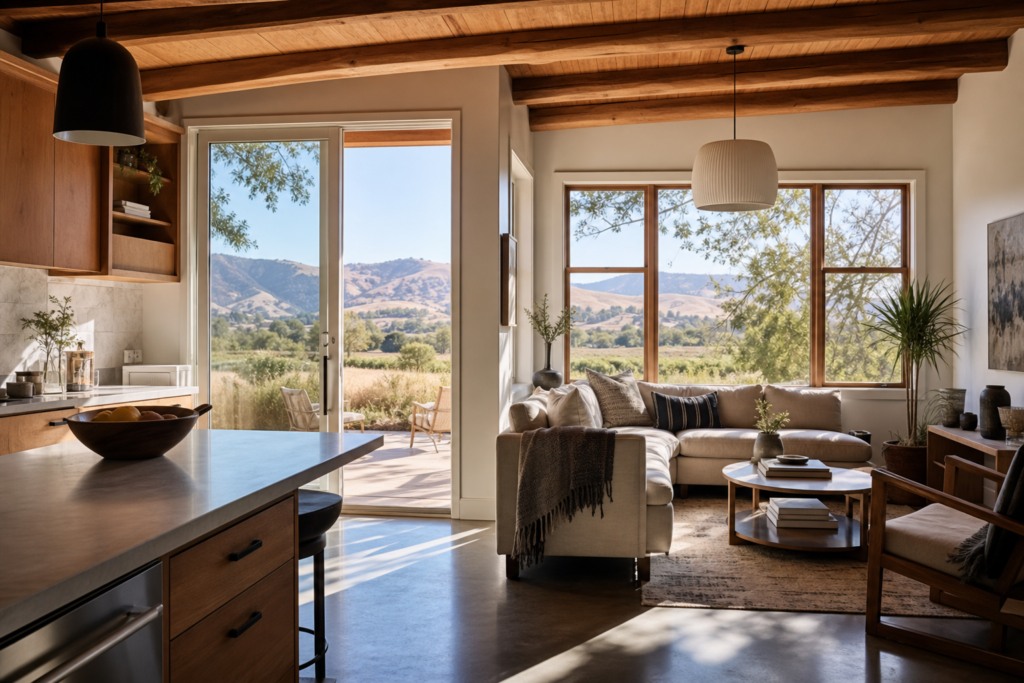
Winters, California offers small-town character with a walkable downtown, farm-to-table dining, and outdoor recreation just minutes away, while sitting roughly 30 miles west of Sacramento. It’s one of the few places in Yolo County where you can genuinely have both country living and city access.
Living in Winters CA: Rural Charm Near City Life
What is it actually like to live in Winters, California?
Winters is a small agricultural city in Yolo County, roughly 30 miles west of Sacramento, that manages to deliver genuine small-town character alongside real proximity to urban amenities. You get a walkable downtown with local restaurants, wine bars, and independent shops, plus direct access to some of Northern California’s best outdoor recreation, without sacrificing a reasonable commute to Sacramento, Davis, or the Bay Area corridor.
Key Takeaways
- Winters sits approximately 30 miles west of Sacramento along Highway 128, making it one of the closest true small towns to the Sacramento metro area.
- Lake Berryessa is about 9 miles from downtown Winters, with Putah Creek, Lake Solano, and Stebbins Cold Canyon also nearby for hiking, fishing, boating, and kayaking.
- The most recent available market data, from the three months ending July 2026, shows a median sale price of approximately $590,000 and a median of 20 days on market in Winters, based on secondary reporting of Redfin figures.
- Winters inventory rose sharply heading into fall 2026, with 46 listings reported in the three months ending August 2026, compared with 30 during the same period in 2025, giving buyers more options than they had a year ago.
- The Capay Valley and Esparto offer a different, more rural version of this lifestyle, with agricultural properties, ranchettes, and open land that Winters proper does not have in the same abundance.
What makes Winters different from other small towns near Sacramento?
Most small towns within commuting distance of Sacramento feel like suburbs that just haven’t finished growing yet. Winters doesn’t. It has an actual identity, built around agriculture, wine country, and outdoor recreation, and that identity is visible the moment you walk downtown.
According to Visit California, the downtown has a walkable feel with restaurants, wine and beer venues, and local shops. That’s not marketing language. I’ve walked those blocks with clients who were genuinely surprised by how much was there. For a city this size, the food and beverage scene punches well above its weight, and the farm-to-table connection is real because the farms are right outside town.
What I tell buyers who ask me about Winters is this: it’s the kind of place where you can have dinner at a good restaurant on a Friday night and be on a hiking trail by Saturday morning without getting in a car twice. That combination is rare in California at any price point.
If you want a deeper look at the town’s personality and history, I’ve written more about it in my post on Winters, California: A Hallmark Town Full of Charm and Possibility.
The outdoor access is genuinely exceptional
Discover Winters puts Lake Berryessa at about 9 miles from downtown, and that distance matters. Lake Berryessa isn’t a small reservoir. It’s a full destination with boating, kayaking, fishing, and camping, plus the Monticello Dam and its famous Glory Hole spillway. You don’t need to plan a trip to get there.
Putah Creek runs along the south side of the community, and Stebbins Cold Canyon Natural Reserve offers canyon hiking that would be a destination drive from Sacramento. Lake Solano adds another option for fishing and picnicking. For buyers who factor outdoor access into where they live, this concentration of recreation within a few miles of town is one of Winters’ strongest selling points.
The commute picture
Winters sits on Highway 128, with Highway 505 providing a direct connection to Interstate 5 and Interstate 80. That means Sacramento, Davis, Vacaville, and the Fairfield corridor are all reachable without navigating through heavy urban traffic from the start. Commute times will vary by destination, time of day, and traffic conditions, so I always tell buyers to drive the route themselves at the time they’d actually be commuting before they decide. But the highway access is genuinely good for a town this size.
What does the Winters real estate market look like right now?
The most recent figures I can point to come from secondary reporting based on Redfin data. For the three months ending July 2026, California Housing Market News reported a median sale price of approximately $590,000, 15 homes sold, and 20 days on market in Winters. These are secondary figures, not a local MLS report, so treat them as directional rather than definitive.
What’s more notable heading into fall 2026 is the inventory shift. A separate August 2026 report showed 46 listings in the three months ending August 2026, compared with 30 during the same period in 2025. That’s a meaningful increase in selection, and it changes the dynamic for buyers who may have felt squeezed in prior years.
| Metric | Winters (3 months ending July 2026) | Source |
|---|---|---|
| Median sale price | ~$590,000 | CA Housing Market News (secondary, Redfin data) |
| Homes sold | 15 | CA Housing Market News (secondary, Redfin data) |
| Median days on market | 20 | CA Housing Market News (secondary, Redfin data) |
| Active listings (3 mo. ending Aug 2026) | 46 (vs. 30 in Aug 2025) | CA Housing Market News (secondary, Redfin data) |
For buyers comparing Winters to nearby Woodland and Davis, I’ve put together a detailed breakdown in my post on Winters Real Estate vs. Woodland and Davis. The markets behave differently, and the right choice depends on what you’re actually looking for in a home and a community.
Winters vs. Esparto and the Capay Valley
Winters and Esparto are often mentioned in the same breath, but they offer genuinely different experiences. Winters has a more developed downtown and a slightly more connected feel to Highway 505 and the I-80 corridor. Esparto and the Capay Valley offer something harder to find: agricultural land, ranchettes, farms, vineyards, and open space at a scale that Winters proper doesn’t have in the same abundance.
If you’re looking for a country home with acreage, an orchard, or a small working ranch, the Capay Valley is where I spend most of my time with clients. If you want small-town living with a more walkable downtown and slightly easier access to the freeway system, Winters is worth a serious look. The right answer depends entirely on your priorities, and that’s a conversation worth having before you start touring properties.
Frequently Asked Questions
Is Winters a good place to live for people who want rural surroundings but still need access to Sacramento?
Yes, Winters is one of the better options in the region for that balance. At roughly 30 miles west of Sacramento, it’s close enough for a workday commute while still offering a genuine small-town feel, agricultural surroundings, and outdoor recreation within minutes of downtown. Actual commute times depend on your destination, route, and time of day, so driving the route yourself before committing is always a good idea.
How far is Winters from Sacramento, Davis, Vacaville, and the Bay Area?
Winters is approximately 30 miles west of Sacramento and sits close to Highway 505, which connects to Interstate 5 and Interstate 80. That makes Davis, Vacaville, and the broader I-80 corridor all accessible without a complicated drive. The Bay Area is farther, generally an hour or more depending on traffic, but Highway 128 west and the I-80 connection through Vacaville are the typical routes.
What outdoor activities are available near Winters and the Capay Valley?
The options are unusually concentrated for a small town. Lake Berryessa, about 9 miles from downtown Winters, offers boating, kayaking, fishing, and camping. Putah Creek runs along the south edge of town. Lake Solano, Stebbins Cold Canyon, and Stebbins Canyon Natural Reserve add hiking, fishing, and picnicking options. Most of these are within a short drive, not a day trip.
What is the difference between living in Winters and living in Esparto or the Capay Valley?
Winters has a more developed downtown with restaurants, wine bars, and shops, and somewhat easier freeway access via Highway 505. Esparto and the Capay Valley are more agricultural in character, with more available land, ranchettes, farms, and open space. Winters suits buyers who want small-town walkability; the Capay Valley suits buyers who want acreage, privacy, and a deeper connection to agricultural land.
Are there local restaurants, shops, wineries, and farm-to-table businesses in Winters?
Yes, and the concentration is notable for a city this size. According to Visit California, the downtown includes restaurants, wine and beer venues, and local shops within a walkable area. The farm-to-table connection is grounded in the surrounding agricultural landscape, which includes orchards, vineyards, and row crops throughout Yolo and Napa counties nearby.
If you’re weighing a move to Winters or the Capay Valley, the most useful thing you can do before you start searching listings is talk through what you actually need from a location. Every situation is different, and the only way to know which community fits is to run through the specifics with someone who knows both markets well.
Before you make a decision that affects where you live, how you commute, and what kind of property you own, call me. I’ll walk you through your options, help you understand what’s actually available in Winters, Esparto, and the Capay Valley right now, and make sure you’re looking at properties that match your real priorities, not just your search filters.
Call or Text: 530-713-6121
Email: l.pillard@gmail.com
To learn more about my experience, local knowledge, and approach, visit LindaPillardRealEstate.com, including my Real Estate Library with books and original resources for buyers, sellers, and property owners.
Equal Housing Opportunity. Linda Pillard, CalDRE #01208519, Green Fields Real Estate Services – Linda Pillard Real Estate, licensed by the California Department of Real Estate (CalDRE). This article is general information only and does not constitute legal, tax, or financial advice. Verify your own figures with your closing agent, tax advisor, or lender.